Docxsity Agent
Themes in Indian History (Part-3) | Class 12 (English)
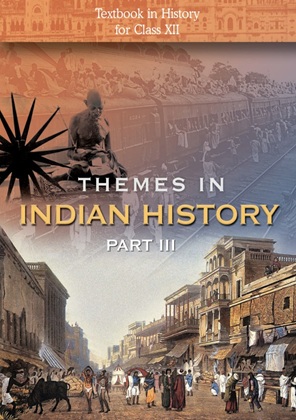
The textbook Themes in Indian History, Part III, designed for Class XII students, provides a profoundly valuable educational experience by offering an in-depth study of India's historical and constitutional landscape. This comprehensive volume spans an extensive chronological period, commencing with ancient civilizations like Harappa and meticulously detailing the complex process involved in the framing of the Indian Constitution. Rather than presenting a broad, general survey, the book focuses intensely on select themes that explore the economic, cultural, social, political, and religious developments across different eras, ensuring a nuanced and interconnected understanding of India's past. Students are thus guided to appreciate the intricacies of historical evolution and the foundational debates that shaped the nation, including the formulation of ideals such as justice, equality, and freedom within the Constituent Assembly, as well as critical discussions around central-state powers and the national language.
Furthermore, this textbook is crafted to significantly enhance students' critical thinking and analytical skills, aligning seamlessly with contemporary educational reforms. It explicitly introduces readers to the methodologies employed by historians, demonstrating how historical meaning is derived from a diverse array of sources, including visual artifacts, inscriptions, archaeological findings, and official government records. By incorporating excerpts from primary sources and various illustrations, the book actively engages students in the process of historical inquiry, equipping them with the ability to critically evaluate and interpret evidence. This pedagogical approach is in direct harmony with the National Education Policy 2020, which advocates for reducing content load, promoting experiential learning, and fostering a creative mindset, thereby moving beyond conventional rote memorization. The content rationalization undertaken by the NCERT ensures the book remains relevant and highly effective in modern Indian education, facilitating a deeper connection between classroom learning and real-world historical understanding.
