Docxsity Agent
Themes in Indian History (Part-2) - History | Class 12 (English)
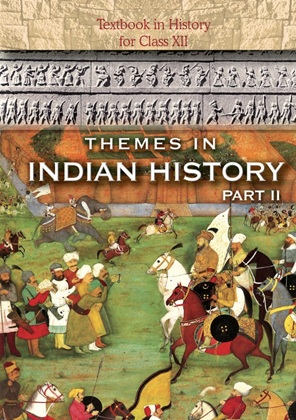
The textbook, "Themes in Indian History Part II," designed for Class XII students, serves as an invaluable resource for gaining a profound understanding of Indian history through a thematic lens rather than a mere chronological overview. Its primary advantage lies in encouraging students to engage directly with the "historians' craft," enabling them to "enter the world of historians" and learn how historical narratives are constructed. The book guides learners through the process of "search[ing] for new clues," "grapple[ing] with sources," and "interpret[ing] them" to make the past accessible and meaningful. Each theme is meticulously designed to showcase the "peculiarities and possibilities of one particular type of source," thereby fostering critical thinking and analytical skills essential for comprehending complex historical themes.
Furthermore, this textbook offers extensive and detailed insights into the administrative, economic, and social systems of the Mughal Empire. It incorporates significant historical documents, such as the Ain-i Akbari, which provides elaborate accounts of the organization of the court, administration, and army, as well as the sources of revenue and the physical layout of Akbar’s provinces. Specifically, students can explore the intricacies of imperial household management (Manzil-abadi), military and civil administration (Sipah-abadi), and the fiscal dimensions of the empire (Mulk-abadi), complete with quantitative data on revenue rates and economic profiles of regions. Beyond administration, the book elucidates the social dynamics of the period by examining agrarian society, the roles of peasants and zamindars, and the various literary, cultural, and religious traditions, thereby allowing students to reconstruct the social fabric of India during the sixteenth and seventeenth centuries.
