Docxsity Agent
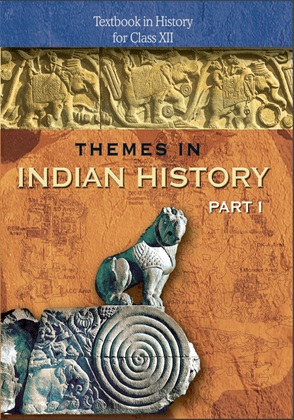
Themes in Indian History (Part-1) | Class 12 (English)
The textbook titled "Themes in Indian History Part I" for Class XII offers a highly advantageous and distinctive approach for students to comprehensively understand early Indian history. This publication moves beyond a conventional chronological survey of five millennia, opting instead for a focused and in-depth study of select themes. This methodology is particularly beneficial as it enables a more detailed exploration of significant developments across various spheres, including economic, cultural, social, political, and religious aspects. The book explicitly aims to foster an integrated understanding by deliberately breaking down the traditional boundaries that often separate these distinct domains of historical inquiry.
The chronological breadth of this textbook is extensive, spanning from the ancient Harappan civilization through to the pivotal period of the framing of the Indian Constitution. Within this vast timeline, students are introduced to the political landscapes of different eras, examining the nature of authority and power, and delving into how societies were organized, functioned, and underwent change. Furthermore, the content sheds light on religious life, associated ritual practices, the operational dynamics of historical economies, and the transformative shifts observed within both rural and urban societies. A key advantage for students lies in the book's invitation to engage with the processes of historical investigation, accompanying historians as they interpret diverse sources such as inscriptions, archaeological findings, and visual materials. This approach not only enriches the learning experience by cultivating critical thinking but also underscores the relevance of past events and societal structures to contemporary studies. The textbook's design also incorporates opportunities for contemplation, group discussions, and hands-on activities, aligning with the National Education Policy 2020 to promote experiential learning and reduce content load on students.
