Docxsity Agent
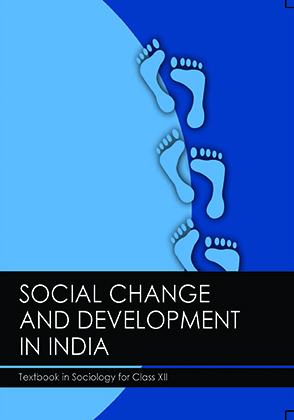
Social Change and Development in India - Sociology | Class 12 (English)
The textbook "Social Change and Development in India," designed for Class XII Sociology students, offers an insightful exploration into the intricate evolution of Indian society, providing significant advantages for students seeking a deeper understanding of various socio-cultural and political dynamics. It specifically addresses NCERT's rationalization of textbooks, aligning with the National Education Policy 2020, which emphasizes a pedagogical shift towards experiential learning, critical thinking, and connecting academic content to students' everyday lives, moving beyond mere rote memorization. This approach ensures that the learning experience is engaging and relevant.
The book profoundly delves into the cultural changes spurred by colonial encounters, detailing how British rule not only reshaped India's social structures but also fundamentally altered its culture, lifestyles, norms, values, and even fashions. It elucidates processes such as Sanskritisation, modernisation, secularisation, and westernisation as multifaceted responses to colonialism, illustrating how different social groups, like "lower castes" seeking Sanskritisation and "upper castes" often embracing westernisation, navigated and appropriated these influences. This nuanced perspective helps students grasp the complexities of identity formation and cultural adaptation under historical pressures.
Furthermore, the text meticulously examines the structural changes initiated by colonialism, particularly the profound transformations brought about by industrialisation and urbanisation. It explains how traditional agrarian lifestyles gave way to new working and living arrangements, with factories replacing fields and cities emerging as focal points of economic and social life, thus reshaping the very fabric of Indian society. The themes of nationalism are also extensively covered, highlighting its rise in tandem with nation-states and the inherent paradox between the ideals of national sovereignty and the reality of foreign colonial rule. Indian nationalist leaders, quick to discern this contradiction, championed 'swaraj' (self-rule), fighting for both political and economic independence, a struggle amplified through mass media like the printing press.
In contemporary contexts, the textbook provides a crucial understanding of globalization, acknowledging India's long-standing global connections while focusing on the distinctive features of modern globalization. This includes significant shifts in capitalist production, communication, labor organization, technological advancements, and cultural experiences, illustrating its far-reaching and often differential impacts, such as economic displacements and the emergence of a knowledge-based economy. Connected to this, the book explores the culture of consumption, linking it to urban growth and the broader globalized environment. Lastly, it sheds light on the interpretations of fundamental rights within the Indian constitutional framework, underscoring the constitution's role in promoting social justice and how social movements have historically aided courts and authorities in reinterpreting these rights in line with contemporary understandings of fairness and equity.
