Docxsity Agent
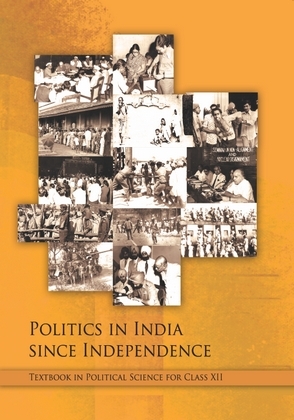
Politics in India Since Independence - Political Science | Class 12 (English)
The textbook "Politics in India Since Independence" serves as an invaluable resource for students of political science, offering a comprehensive look at the intricate political journey of India since its liberation in 1947. This book aims to bridge the knowledge gap for younger citizens, connecting the historical freedom struggle with the contemporary political realities that shape the nation. It provides crucial insights into the evolution of India's democratic processes and political landscape over several decades.
A significant advantage of this textbook lies in its detailed exploration of India's foreign policy, highlighting its formation amidst the challenging global context of the Cold War and decolonization. It elucidates how leaders like Jawaharlal Nehru shaped India's external relations with core objectives of preserving sovereignty, protecting territorial integrity, and fostering economic development, primarily through the policy of non-alignment. Students gain an understanding of India's strained relationships with neighbors, including conflicts with China and Pakistan, and the evolution of its nuclear policy. The book further sheds light on the interplay between domestic compulsions and the international climate in shaping these external relations.
Moreover, the book meticulously covers significant historical events that have profoundly impacted India's political trajectory. From the immediate trauma of Partition and the complex integration of princely states to the linguistic reorganization of states, the 1967 general elections that challenged Congress dominance, the declaration of the Emergency in 1975, and the later economic reforms of 1991 and the rise of coalition politics, the textbook provides a rich historical narrative. It also delves into various domestic challenges, such as the fundamental tasks of nation-building, managing regional aspirations and tensions across different states, and the ongoing debates surrounding economic development strategies. Through these narratives, students can better comprehend the complexities of political evolution and the continuous churning of factors that define democratic politics in India, making sense of the political reality around them and contributing to democratic deliberations.
