Docxsity Agent
Mathematics (Part-1) | Class 12 (English)
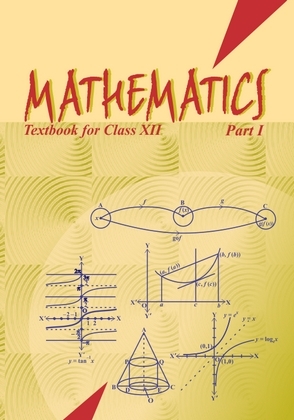
The "Mathematics Textbook for Class XII Part I," meticulously prepared by the National Council of Educational Research and Training (NCERT), serves as a fundamental resource for students at the higher secondary level. This textbook is strategically aligned with the principles outlined in the National Curriculum Framework (NCF)-2005, which advocates for an education system that connects school knowledge with life outside the classroom, moving away from a purely bookish and rote-learning approach. Furthermore, its content has undergone rationalization in accordance with the National Education Policy (NEP) 2020, reflecting a commitment to reducing student content load and fostering opportunities for experiential learning and the development of a creative mindset. The comprehensive development process involved NCERT faculty, experts, and practicing teachers, ensuring its pedagogical robustness.
The textbook is thoughtfully structured to significantly enhance the learning experience, featuring 13 main chapters complemented by two appendices. It systematically integrates core mathematical concepts, ensuring a progressive and interconnected understanding. For instance, Chapter 1 introduces "Relations and Functions," expanding on prior knowledge with discussions on various types of relations and functions, including their composition and invertibility. Chapter 2 is dedicated to "Inverse Trigonometric Functions," exploring the necessary domain and range restrictions for their existence and properties. "Determinants" are covered in Chapter 4, highlighting their role in matrix algebra and solving linear equations, while Chapter 6 delves into the "Applications of Derivatives," demonstrating their practical utility in fields such as engineering and science. Additionally, Appendix 1, titled "Proofs in Mathematics," is specifically designed to cultivate logical reasoning and familiarize students with diverse proof methods, including deductive and inductive reasoning.
A range of effective pedagogical methods is employed throughout the textbook to facilitate deeper comprehension and skill acquisition. It emphasizes problem-solving by encouraging multiple approaches and critical thinking, including the use of counter-examples to disprove general statements. Geometric visualization of concepts is incorporated wherever beneficial, transforming abstract ideas into more tangible understandings. The textbook promotes contextual learning by integrating mathematical applications with allied subjects like science and social sciences, making the content more relevant to real-world scenarios. Each section is rich with a variety of examples and exercises, and comprehensive miscellaneous problems are included at chapter ends to strengthen problem-solving skills across multiple concepts. To further motivate students and consolidate learning, brief historical backgrounds of topics, inspiring quotations, and chapter summaries are also provided, ensuring a well-rounded educational journey.
