Docxsity Agent
Kriti - Arts | Class 8 (English)
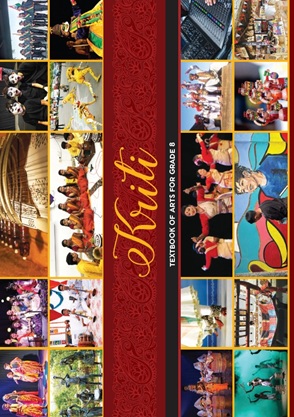
The textbook Kriti: Textbook of Arts for Grade 8 is designed to enhance students' educational experiences across various creative fields, specifically focusing on music, visual arts, theatre, and dance. It nurtures essential skills such as creativity, cultural literacy, and artistic expression, equipping students to engage interactively with the arts. The structured approach of the textbook enriches students’ understanding through hands-on activities that foster an appreciation for diverse art forms and their societal influence.
The content extends across four key sections:
Theatre: This section encourages students to develop their skills in scriptwriting and performance. They collaborate in teams to create plays, gain experience in theatre-making, and learn to appreciate theatrical performances through reviews, which provide insights into the roles of different elements in drama.
Music: In this section, students delve deeper into music, focusing on components like swar, laya, and shabd, with a mix of traditional and contemporary influences. Engagement with both Hindustani and Carnatic music allows students to explore their cultural significance and personal expression through musical practices.
Visual Arts: The visual arts section emphasizes design principles and encourages students to analyze and create artwork. It introduces sustainable practices through the use of everyday materials and promotes storytelling through artistic expression, helping students to connect art with their daily lives.
Dance and Movement: This section builds on students’ previous learning, highlighting the importance of understanding movement and rhythm while also promoting emotional expression. Students learn about various dance forms and techniques, integrating creativity and inclusivity into their performances.
A distinctive feature of this textbook is its assessment method, which moves away from traditional grading systems. Instead, it focuses on creativity, critical thinking, collaboration, and process-based evaluations, reflecting a holistic approach that aligns with the goals set forth by national educational frameworks.
In summary, Kriti aims to cultivate a transformative learning culture by providing a comprehensive overview of various art forms while promoting inclusivity, technology integration, and critical assessment methods. The authors express gratitude for the contributions made in creating this resource, and they welcome ongoing feedback for continuous improvement.
