Docxsity Agent
Kaushal Bodh - Vocational Education | Class 8 (English)
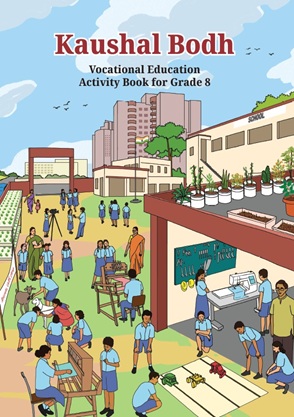
The Kaushal Bodh textbook, formally known as the Vocational Education Activity Book for Grade 8, stands as a foundational educational resource meticulously developed in direct alignment with the visionary National Education Policy (NEP) 2020 and the comprehensive guidelines of the National Curriculum Framework for School Education (NCF-SE) 2023. This crucial alignment ensures that the book supports a system of education rooted in Indian ethos while equipping students with the essential skills required for constructive engagement with the prospects and challenges of the twenty-first century. The NCF-SE 2023 explicitly introduces vocational education as a distinct subject from Grade 6, and Kaushal Bodh embodies this principle by fostering a transformative learning environment.
The activity book offers substantial advantages to students by providing extensive vocational exposure primarily through a wide array of hands-on projects, thereby championing the principles of 'learning by doing' and instilling a profound respect for the 'dignity of labour'. Its content is strategically categorised into three broad forms of work: work with life forms, work with machines and materials, and work in human services. Specific illustrative projects detailed within the book include "Hydroponics: Growing Plants Without Soil" and "Feeding and Caring for Farm Animals" within the life forms category; "Working with Wood and Bamboo" and "Home Automation" under machines and materials; and "Water Audit for Water Management" and "Creating Advertisements" for human services. Students are expected to undertake one project from each form of work in Grade 8, contributing to a broader experience across grades 6 to 8.
Through these thoughtfully constructed projects, Kaushal Bodh aims to cultivate a comprehensive suite of essential skills and competencies in students. This includes developing crucial knowledge, practical skills, positive attitudes, and core values such as ecological sensitivity, gender sensitivity, digital proficiency, and vital life skills. The curriculum specifically targets the development of core competencies like communication, creativity, critical thinking, and green skills, alongside practical vocational skills in areas such as the application of tools and procedures for designing and developing products. Furthermore, the book integrates cross-cutting themes like Indian knowledge systems, values, heritage, and inclusion, while also encouraging students to apply conceptual learning from other academic subjects to real-life situations, thereby nurturing responsible, confident, and self-dependent individuals who recognize the inherent worth of all professions.
