Docxsity Agent
Indian Society - Sociology | Class 12 (English)
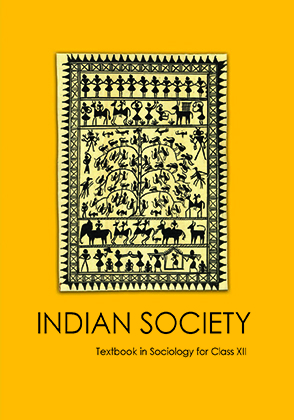
"Indian Society: Textbook in Sociology for Class XII" stands as a crucial educational resource, representing the first of two sociology textbooks for Class XII. It is specifically crafted to align with the core principles of the National Curriculum Framework 2005 and the distinct objectives outlined by NCERT for the sociology curriculum. The primary goal of this textbook is to introduce students to the foundational structure of Indian society, encouraging them to adopt a sociological perspective rather than relying solely on common sense. This approach aims to equip learners with the ability to connect their classroom studies with their external environment, thereby enhancing their capacity to observe, interpret, and analyze the complexities of social life and contemporary changes within Indian society.
A key advantage for students lies in the textbook's robust emphasis on activity-based learning and practical work, a new feature that significantly impacts the evaluation process, with a dedicated twenty percent of total marks for sociology allocated to this section. Chapter 7, titled "Suggestions for Project Work," offers invaluable guidance for undertaking small, practical research projects. This hands-on experience is designed to immerse students in the practicalities of sociological research, allowing them to grasp both the stimulating aspects and the inherent challenges involved in systematically collecting evidence. Such activities are vital for developing critical thinking and analytical skills, enabling students to question taken-for-granted assumptions and rethink societal issues.
The textbook is meticulously structured to introduce fundamental sociological concepts that empower students to understand and interpret social phenomena. It moves beyond superficial understandings to provide a comprehensive framework for appreciating the vast diversity characterizing Indian society and the world at large. Crucially, the book delves into significant themes such as disability, extensively explored in Chapter 5, "Patterns of Social Inequality and Exclusion." This section prompts students to critically examine societal attitudes, public perceptions, and the challenges faced by the differently abled, highlighting how labels and cultural views often perpetuate victimhood or attribute disability to fate. Similarly, regionalism is a central discussion point within Chapter 6, "The Challenges of Cultural Diversity," where the textbook elucidates its intricate roots in India's diverse languages, cultures, tribes, and religions, while also addressing how federalism serves as a mechanism for accommodating these regional sentiments. This comprehensive coverage helps students navigate issues like regional chauvinism and communal conflict within the broader context of a diverse democratic nation.
