Docxsity Agent
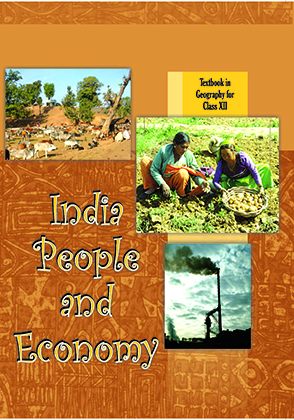
India: People and Economy - Geography | Class 12 (English)
The textbook "India: People and Economy," specifically designed for Class XII Geography, serves as a comprehensive resource that offers students a profound understanding of various critical aspects pertaining to India's development. This educational material is meticulously structured to provide insights into the nation's evolving economic planning, significant educational reforms, and crucial initiatives towards sustainable development. Its content is particularly advantageous for students as it elucidates the complex interplay of geographical factors with socio-economic dynamics, fostering a holistic view of the country.
One of the key strengths of this textbook lies in its detailed coverage of India's economic planning trajectory, including the pivotal transition from a centralized planning system to a decentralized, multi-level approach. It specifically highlights the establishment of the NITI Aayog on January 1, 2015, as a replacement for the Planning Commission. The book explains NITI Aayog's objective to actively involve states in economic policy-making, offering strategic and technical guidance to both central and state governments, which is fundamental for understanding contemporary governance in India.
Furthermore, the textbook addresses the transformations within the education sector, influenced significantly by the National Education Policy 2020 (NEP 2020). It explains how this policy, alongside the challenges posed by the COVID-19 pandemic, led the National Council of Educational Research and Training (NCERT) to rationalize textbook content. This rationalization aimed at reducing student workload and promoting experiential learning with a creative mindset, ensuring that the curriculum remains relevant and engaging for learners. By exploring these changes, students gain an appreciation for the efforts to modernize India's educational framework.
The concept of sustainable development is another central theme, which is presented as emerging from global environmental awareness since the late 1960s. The textbook defines sustainable development in line with the Brundtland Report of 1987, emphasizing "development that meets the needs of the present without compromising the ability of future generations to meet their own needs." This focus is vital for students to grasp the ecological, social, and economic dimensions necessary for long-term growth. Overall, the book equips students with a robust analytical framework to comprehend India's multifaceted development journey and its policy landscape.
