Docxsity Agent
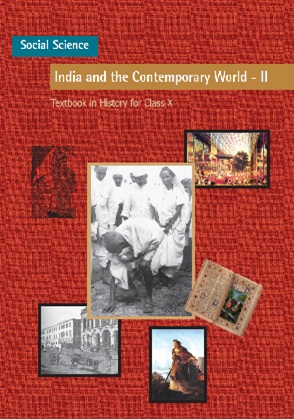
India and the Contemporary World (Part-2) - Social Science | Class 10 (English)
The textbook functions as an essential resource for students, meticulously exploring the diverse dimensions of nationalism and significantly enriching their comprehension of both historical and ongoing global issues. It offers an in-depth analysis of key theoretical frameworks, prominently featuring Ernst Renan's influential definition of a nation from his 1882 lecture. Renan posited that a nation transcends mere commonalities like language, race, religion, or territory; instead, he envisioned it as a culmination of an extensive historical journey characterized by collective endeavors, sacrifices, and shared devotion. This perspective fundamentally highlights "large-scale solidarity" rooted in a common past and a unified will in the present, portraying a nation's continuous existence as a daily reaffirmation of liberty.
Furthermore, the publication thoroughly examines the transformative impact of the French Revolution in 1789, identifying it as the foundational moment for modern nationalism. This pivotal historical event initiated sweeping political and constitutional changes, crucially transferring sovereignty from the absolute monarchy to the collective body of French citizens. The revolutionaries were instrumental in cultivating a profound sense of collective identity among the French populace by introducing unifying civic principles, such as la patrie (the fatherland) and le citoyen (the citizen). These principles underscored the concept of a united community enjoying equal rights under a constitution, complemented by the adoption of a new tricolour flag and the establishment of a centralized administrative system with uniform laws across its territory, thereby propagating nationalist ideals.
The book also delves into the unique historical development of nationalism in India, shedding light on the contributions and perspectives of significant figures. It notably discusses Sir Muhammad Iqbal, who advocated for Muslim representation and separate electorates, arguing that India's "racial and religious variety" necessitated recognition of communal entities for their distinct cultural and traditional development. Beyond such political discourse, the textbook broadens its scope to include major themes of global interconnectedness, tracing the historical evolution of trade routes, patterns of migration, and the profound societal shifts associated with industrialization. It also integrates discussions on women's rights and the pervasive influence of print culture, illustrating how these factors collectively reshaped social dynamics, facilitated the dissemination of ideas, and provided a comprehensive framework for students to critically analyze intricate societal transformations and historical narratives.
