Docxsity Agent
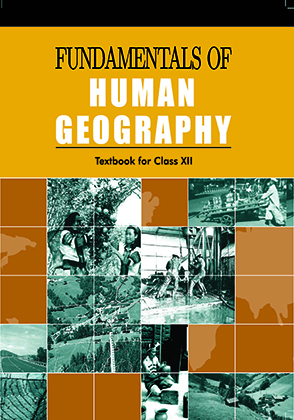
Fundamentals of Human Geography - Geography | Class 12 (English)
The textbook "Fundamentals of Human Geography," specifically designed for Class XII students, offers a comprehensive and integrated approach to understanding the complex interplay between human societies and the Earth's physical environment. This educational resource defines human geography as the synthetic study of the dynamic relationship between people and the planet's surface, delving into the spatial distribution of human phenomena and the socio-economic disparities observed globally. It elucidates core concepts such as the 'naturalisation of humans,' which describes early societies adapting profoundly to nature's dictates, and the 'humanisation of nature,' where technological advancements allow humans to create possibilities and cultural landscapes from natural resources, thereby bearing the imprints of human endeavor.
The book further extends its exploration into significant sub-fields, most notably economic geography. This branch is presented as an inherently interdisciplinary domain, establishing strong interfaces with economics and related social sciences. Within economic geography, students learn about the environmental influences, both physical and cultural, on human economic activities, and how these factors contribute to variations in livelihoods across different regions. Specific areas covered include the geography of resources, agriculture, industries, marketing, tourism, and international trade. Moreover, the textbook meticulously outlines the various factors that influence industrial locations, such as access to markets, the availability and proximity of raw materials, labor supply, power resources, efficient transportation and communication networks, governmental policies that foster balanced economic development, and agglomeration economies, which represent benefits derived from industrial clustering. The text also introduces the concept of "footloose industries," characterized by their independence from specific raw materials and their reliance on component parts and road accessibility.
A key advantage for students utilizing this textbook lies in its pedagogical design, which is rooted in contemporary educational philosophies. Guided by the National Curriculum Framework (NCF) 2005 and having undergone content rationalization in alignment with the National Education Policy (NEP) 2020, the book is structured to minimize curricular burden and foster experiential learning. It encourages opportunities for critical contemplation, small-group discussions, and hands-on activities, ensuring that complex geographical and economic concepts are not only accessible but also relatable to real-world contexts. This approach effectively moves beyond rote learning, enabling students to develop a deeper understanding and practical application of the knowledge, thereby linking their academic studies with their lives outside the classroom.
