Docxsity Agent
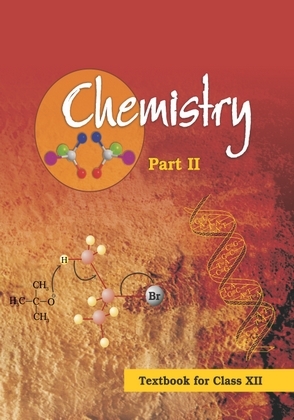
Chemistry (Part-2) | Class 12 (English)
The "Chemistry Part II, Textbook for Class XII," published by the NCERT, presents a highly advantageous learning resource for students, designed with contemporary educational philosophies in mind. A core strength of this textbook lies in its strong emphasis on an experiential learning approach, which actively discourages rote memorization. This methodology aligns with the National Education Policy 2020's directive to reduce content load and foster a creative mindset, providing ample opportunities for students to engage in contemplation, small group discussions, and hands-on activities. Such an approach links classroom knowledge to real-life experiences, empowering children to construct new knowledge by interacting with the information presented, rather than passively receiving a fixed body of facts.
The textbook benefits from a well-organized structure, comprising sixteen units across two parts, which are systematically arranged around the fundamental laws and principles of chemistry. While unit titles might suggest a compartmentalization into physical, inorganic, and organic chemistry, the text consciously intermingles these sub-disciplines to offer a unified and cohesive understanding of the subject. This design not only aids in conceptual clarity but also enables students to predict chemical outcomes as they master the underlying principles.
Furthermore, the textbook excels in integrating real-life applications and societal relevance, making chemistry stimulating and exciting. It draws references to historical developments and the practical usefulness of chemistry in daily life, illustrating concepts with examples from the surrounding environment. The content also highlights critical environmental and energy issues directly related to chemistry, addressing them at appropriate junctures throughout the book. This contextualization ensures that students appreciate the profound impact of chemistry on human well-being and society, from the importance of carbonyl compounds in fabrics and drugs to the clinical utility of halogenated organic compounds as antibiotics and anesthetics.
Several unique features further enhance the learning experience. The rationalized content ensures that information is concise yet thoroughly substantiated with facts, with complex compound descriptions made interesting through discussions of their structures and reactivity. The application of thermodynamic, kinetic, and electrochemical principles to chemical reactions helps students grasp the underlying reasons for phenomena. Each unit is equipped with a generous number of illustrative examples, complete with solutions, alongside in-text questions and comprehensive end-of-unit exercises designed to apply important principles and stimulate critical thinking. Additionally, distinct 'deep yellow bar' boxes provide supplementary, non-evaluative material such as biographical sketches of scientists and extra topic-related information, adding a rich dimension to the learning journey.
