Docxsity Agent
Business Studies (Part-1) | Class 12 (English)
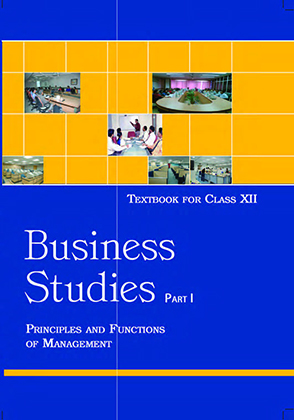
The textbook titled "Business Studies Part I: Principles and Functions of Management," specifically developed for Class XII, offers a comprehensive and foundational understanding of core business concepts. This publication serves as an invaluable resource for students, meticulously detailing the environment in which businesses operate and elucidating the fundamental principles that govern effective management. It covers a wide array of critical areas, including emerging business models, the nuances of entrepreneurship development, the importance of ethics in business, and the responsibilities associated with corporate social responsibility. Furthermore, it addresses contemporary issues relevant to both internal and external business scenarios, ensuring that learners are well-equipped to observe and analyze their immediate surroundings and the broader business landscape. The content is regularly updated, with specific modifications reflecting new provisions from the Companies Act 2013, maintaining its relevance and accuracy. A significant advantage of this textbook for students lies in its ability to aid in understanding the complex business environment. It highlights that businesses do not exist in isolation but constantly interact with an external milieu comprising various influential factors. The book systematically breaks down this external environment into five crucial dimensions: economic, social, technological, political, and legal. By providing insights into elements such as interest rates, societal values, scientific advancements, government policies, and legal frameworks, the textbook enables students to recognize opportunities, anticipate challenges, and understand how to adapt business practices effectively. This comprehensive perspective is essential for developing strategic thinking and informed decision-making skills. Moreover, the textbook provides a thorough exploration of the core management functions, which are depicted as a series of interrelated activities indispensable for any organization's success. These functions include planning, organizing, staffing, directing, and controlling. Planning involves defining objectives and charting a course of action; organizing focuses on structuring tasks and allocating resources; staffing deals with acquiring, training, and developing human resources; directing is concerned with guiding, motivating, and leading employees; and controlling involves monitoring performance and taking corrective action. The book emphasizes that these functions are not performed in isolation but are continuously intertwined, forming a dynamic process where coordination is the unifying force that ensures harmony and efficiency in achieving organizational goals. To further enhance student learning and provide practical insights into managerial challenges, the textbook integrates significant motivational theories, such as Maslow's Need Hierarchy Theory. This theory is presented as a framework for understanding human behavior and motivation, positing that individuals are driven by a progression of needs from basic physiological requirements to self-actualization. By examining how different needs—like basic salary, pension plans, cordial relations, job titles, and goal achievement—influence employees, students gain a crucial understanding of how managers can effectively identify and cater to the motivational needs of their workforce. This holistic approach, combined with additional reading materials, interactive activities, and embedded e-resources, fosters a deeper and more applicable comprehension of business studies, preparing students for real-world managerial roles.
